Explore Expert Nail Guides & Trends See What's Trending
Guide saved to your personal reading list
Nail Care

Nail Extensions 101: Gel-X, Polygel, Acrylics & Builder Gel

Finding Your Perfect Extension Method for Length & Strength

Elena Rostova Editor-in-Chief & Master Nail Educator 14 min read
Verified by Elena Rostova • Master Nail Educator
Nail Extensions 101: Gel-X, Polygel, Acrylics & Builder Gel

Editor's Key Takeaway

"Everything you need to know about modern nail extension systems: Apres Gel-X full-cover tips, hybrid polygel, traditional acrylics, and builder gels."

1. Extension Systems Breakdown: Gel-X, Polygel, Acrylics & Hard Gel

Adding dramatic length, structural balance, and flawless shape to natural nails is no longer restricted to traditional acrylic powder. Over the last several years, advancements in polymer engineering have introduced versatile new extension systems that cater to diverse lifestyles, nail bed anatomies, and health priorities.

Let us thoroughly analyze the four reigning salon extension systems, their chemical formulations, and their physical bonding mechanisms:

1. Aprés Gel-X (Full-Cover Soft Gel Tip System)

Chemical Architecture: Fabricated from 100% soak-off soft gel oligomers rather than cheap ABS plastic. These tips are pre-molded with a built-in structural apex and a tapered cuticle perimeter that blends seamlessly with the natural nail plate.

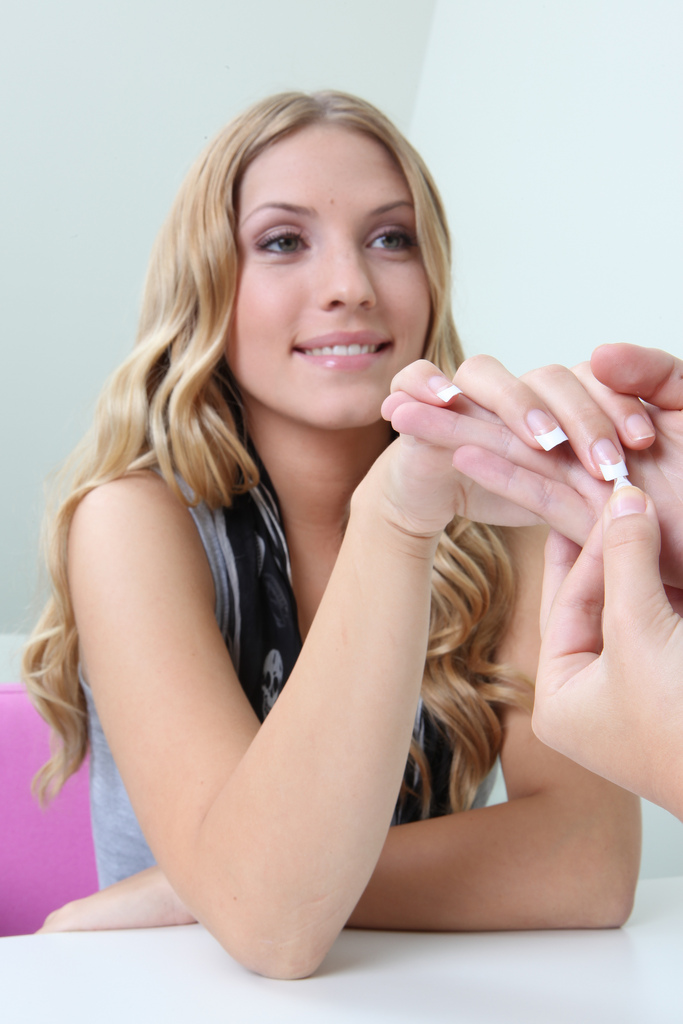
Application Dynamic: The natural nail is lightly etched with a 180-grit buffer, cleansed with alcohol, and coated in a pH-balancing dehydrator and non-acid primer. A bead of thick, viscous Extend Gel is applied into the pre-etched contact pocket of the Gel-X tip. The technician presses the tip onto the nail at a 45-degree angle to roll out air bubbles, flash-cures it under a miniature LED handheld torch for 15 seconds, followed by a full 60-second cure in a main LED lamp.

Key Advantages: Zero chemical odor, ultra-lightweight feel, 100% soak-off removal in acetone in 15 minutes, and zero invasive e-filing directly against the natural nail bed.

2. Hybrid Polygel / Acrylgel (Putty System)

Chemical Architecture: An all-in-one hybrid formulation that suspends fine acrylic powder inside a high-viscosity oligomer gel base. It is dispensed directly from an aluminum toothpaste-style squeeze tube with zero mixing required.

Application Dynamic: The technician slices off a firm bead of putty with a stainless steel spatula, places it onto a paper sculpting form, plastic dual form, or tip, and sculpts the shape using a synthetic brush dipped in an alcohol-based Slip Solution. Because Polygel contains no photoinitiators activated by ambient air, it will never harden or dry until placed under an LED curing lamp, giving the technician infinite time to carve the perfect architectural apex.

Key Advantages: 100% odorless, zero heat spikes during curing, 23% lighter than acrylics, and virtually zero airborne dust during filing because the particles are heavy and fall straight down.

3. Traditional EMA Acrylic Extensions

Chemical Architecture: The time-honored salon classic combining an ethyl methacrylate (EMA) liquid monomer with a benzoyl-peroxide-activated polymer powder bead.

Application Dynamic: Liquid monomer is drawn into a Kolinsky sable brush and dipped into powder to create an emulsified bead. This bead is manually sculpted over a plastic tip or paper form. It air-cures through chemical cross-linking within 3 to 5 minutes into an exceptionally rigid, rock-solid enhancement.

Key Advantages: Unrivaled mechanical strength for extreme XXL lengths (stiletto, duck nails, extreme coffins), pinchable C-curves, and easy 2-week infill maintenance without full removal.

4. Sculpted Hard Gel (Builder Gel Scaffolding)

Chemical Architecture: High-molecular-weight oligomers with tight, non-porous cross-linking. Unlike soft gels, hard gel is completely non-porous to acetone and cannot be soaked off.

Application Dynamic: Sculpted directly onto custom paper forms fitted snugly under the free edge. Cured in 60 seconds under LED light, delivering crystal-clear glass transparency and hypoallergenic safety for clients prone to monomer contact dermatitis.

Key Advantages: Hypoallergenic, diamond-level clarity, zero yellowing over time, completely odorless, and permanent wear with infills every 3 to 4 weeks.

Natural Nail Anatomy Guide

The 3 Layers of Your Natural Nail

Tap each layer to understand how natural nails absorb moisture and why proper care prevents peeling.

1

Top Surface Shield (Upper 10%)

Tightly compacted protective outer surface

Protective Shield
Care Tip: This is the natural shine of your nail. Never aggressively buff or peel off gel polish here, as thinning this layer causes ridges and sensitivity.
2

Flexible Core Layer (75% of Plate)

Natural keratin fibers that bend without snapping

Flexibility Core
Care Tip: This layer gives your nails their natural spring. Daily jojoba cuticle oil keeps it hydrated so your nails bend on impact rather than snapping.
3

Nail Bed Bond (Bottom 15%)

Soft anchor connecting the plate to living tissue

Nail Bed Anchor
Care Tip: Anchors the nail plate to the pink nail bed beneath. Never pick or pry off press-ons or acrylics, which can lift this layer and cause painful plate separation.
100% Pure Jojoba Wax Ester

Molecular weight (~C42) matches human sebum. Penetrates all 3 layers within 30 minutes, restoring natural flex.

Mineral Oil / Petrolatum

Heavy branched hydrocarbons cannot pass through dorsal onychocytes. Forms surface occlusive seal only.

2. Time in Chair, Odor Profile & Salon Economics Compared

When choosing an extension system, practical salon realities—how long you sit in the chair, the chemical odor of the salon air, and the ongoing financial investment—are just as critical as aesthetic beauty.

Extension System Average Chair Time Odor Profile Full Set Price (Avg US) Infill Price (2-3 Wks) Removal Protocol
Aprés Gel-X 45 to 60 Minutes Completely Odorless $65 – $95 Full Set Soak-off ($70+) 100% Soak-Off (15 mins)
Hybrid Polygel 75 to 90 Minutes Completely Odorless $75 – $110 $45 – $65 File-off down to thin layer
Traditional Acrylic 60 to 75 Minutes Pungent Monomer Vapor $50 – $75 $35 – $50 Acetone Soak (30 mins)
Sculpted Hard Gel 80 to 105 Minutes Completely Odorless $85 – $130 $55 – $75 100% Mechanical E-File

The Economic Takeaway: Gel-X is the fastest application service, making it ideal for busy professionals who want salon perfection in under an hour. Traditional acrylic remains the most budget-friendly option for long-term infill maintenance, while Polygel and Sculpted Hard Gel represent luxury artisanal services that demand master technical precision.

3. Weight Mechanics on the Natural Plate & Flexibility Index

One of the most overlooked aspects of nail enhancement health is the physical physics of gravitational torque and lever-arm mechanics. When an artificial tip extends 10mm to 25mm past your natural fingertip, any external impact creates tremendous rotational torque concentrated directly on the hyponychium and nail bed.

Weight Comparison Index

A full set of medium-length Aprés Gel-X tips weighs approximately 50% less than an identical set of traditional acrylics. Polygel sits roughly in between, weighing 23% less than acrylics. Lighter extensions reduce the constant downward gravitational drag on the living nail bed, dramatically decreasing the feeling of heavy fatigue at the end of the day.

Flexural Modulus Shock Absorption

When you stub your finger against a desk or door frame, an acrylic nail’s high rigidity transfers 100% of the kinetic impact force straight down into the dorsal keratin layer, frequently tearing the natural nail off the bed (onycholysis). Gel-X and Polygel absorb blunt impacts by micro-flexing, dissipating the kinetic shock through the tip body before it reaches your living bed tissue.

The Apex Geometry Rule:

Regardless of the extension system chosen, the thickest point of reinforcement (the apex) must be positioned exactly one-third to one-half the distance from the cuticle fold to the free edge. If an apex is placed too far forward on the tip, the extension becomes front-heavy, quadrupling the risk of painful transverse plate snapping.

4. Clinical Decision Guide: Choosing the Safest Method for Weak Nails

If you are struggling with bendable, thin, or post-acrylic damaged natural nails, choosing the wrong extension method can cause catastrophic setbacks. Here is Master Nail Educator Elena Rostova’s clinical decision guide:

  • 1. For Thin, Peeling, or Flexible Nails: Choose Aprés Gel-X or BIAB Overlay.
    Gel-X eliminates aggressive e-file etching on your natural nail plate. Because it is 100% soak-off in acetone, you never need a harsh metal drill vibrating against your sensitive keratin. The soft gel tip acts like an orthotic splint, allowing your natural nail to grow safely underneath without bending.
  • 2. For Habitual Nail Biters with Short Beds: Choose Sculpted Hard Gel or Hybrid Polygel.
    Full-cover tips like Gel-X require at least 2mm of free edge and a balanced nail bed to seat properly without popping off. For severe nail biters, an experienced technician can customize a paper form directly against the fingertip pad and sculpt a bespoke foundation with Polygel or Hard Gel.
  • 3. For Ski-Jump (Koilonychia) or Curved Spoon Nails: Choose Hybrid Polygel.
    Pre-molded tips like Gel-X cannot sit flat on upward-sloping or deeply scooped nails without creating large air gaps beneath the cuticle. Polygel putty allows a technician to manually fill in the anatomical depression, building a level, structurally sound apex.
  • 4. For Clients with Monomer Allergies or Chemical Sensitivities: Choose Sculpted Hard Gel.
    Traditional acrylic liquid monomers (EMA) and low-grade cyanoacrylates are common triggers for contact dermatitis and swollen cuticles. Hard gel oligomers have a large molecular footprint that cannot penetrate living epidermis, offering the highest hypoallergenic safety profile in the nail industry.
Safe Salon Removal Protocol:

Never let a technician use a nail tip or dental floss to "pop" your extensions off. For Gel-X, file down the top coat, wrap fingertips in cotton saturated with 100% pure acetone and aluminum foil for 15 minutes, and gently slide the melted soft gel away with a wooden stick. For Hard Gel, file down 90% of the bulk with an e-file, leaving a thin protective base layer intact on the natural nail plate.

Frequently Asked Questions

Reader Q&A • Expert Insights

Frequently Asked Questions

Expert-verified answers to common questions about techniques, products, and safety.

Which nail extension method lasts the longest between appointments?

Sculpted hard gel and traditional acrylic last 3 to 4 weeks between infills. Aprés Gel-X lasts 3 to 4 weeks, but is designed for a full soak-off and fresh re-application rather than back-filling.

Do nail extensions permanently ruin your natural nails?

Extensions do not inherently cause damage. 100% of nail plate thinning is caused by improper application (over-filing with coarse electric drills) or forceful home peeling. When applied and soaked off properly, natural nails remain healthy and intact.

What is the main difference between Polygel and Gel-X?

Gel-X uses pre-shaped, full-cover soft gel tips adhered with extend gel under LED light. Polygel is a thick acrylic-gel hybrid putty dispensed from a tube that a technician manually sculpts onto forms or tips.

Can you type on a computer keyboard with long nail extensions?

Yes! However, it requires retraining your hand posture. Instead of using the fleshy pads of your fingertips flat against keys, curve your fingers slightly and type using the rounded tip of your nails, or opt for short almond or short coffin silhouettes.