What is the definitive difference between acrylic and gel nails?
The fundamental difference lies in chemistry and elasticity: acrylic nails are created by mixing liquid monomer (ethyl methacrylate) with powdered polymer that air-dries into an ultra-rigid, shock-transmitting shield, while gel nails consist of pre-mixed oligomer resins cured under LED light into a flexible, lightweight coating that bends in harmony with natural keratin.
Editor's Note: If you are planning an at-home gel setup, make sure to read our detailed DIY Gel Nails at Home Protocol. If your nails are currently fragile or recovering from past acrylic sets, review our clinical Nail Health & Recovery Therapy Guide.
The Chemistry: Liquid Monomer vs. Light-Cured Oligomers
At the salon counter, acrylics and gels might seem like interchangeable options for length and color. However, beneath the polished surface lies fundamentally contrasting polymer chemistry.
The Acrylic System (Liquid & Powder): Acrylic relies on an ambient oxidation-reduction reaction. The nail technician dips an expensive Kolinsky sable brush into a liquid monomer—specifically Ethyl Methacrylate (EMA)—and touches the damp brush tip into a fine acrylic polymer powder composed of poly(methyl methacrylate) and benzoyl peroxide initiators.
The monomer instantly dissolves the outer coating of the powder beads, forming a malleable bead of paste. As this paste is sculpted across your nail, the benzoyl peroxide cross-links millions of monomer molecules into dense polymer chains, curing solely through air evaporation in 2 to 3 minutes.
The Gel System (Oligomer Resins): Gel chemistry eliminates the volatile powder-mixing step. Instead, gel products arrive pre-formulated in light-blocking bottles containing short, linked chains of monomers known as oligomers (typically urethane dimethacrylate or polyurethane acrylate) blended with photoinitiators.
These oligomers cannot harden in ambient room air. Only when exposed to calibrated wavelengths of ultraviolet light (specifically 365nm to 405nm emitted by an LED nail lamp) do the photoinitiators release free radicals, locking the oligomers into a cross-linked polymer web in 30 to 60 seconds.
The Critical MMA Hazard: Spotting Toxic, Unregulated Monomers
No discussion of acrylic nails is complete without addressing one of the beauty industry's most persistent safety issues: Methyl Methacrylate (MMA).
In the 1970s, the U.S. Food and Drug Administration (FDA) banned 100% MMA liquid monomer from professional nail cosmetics due to severe allergic contact dermatitis, respiratory sensitization, and irreversible nail plate damage. Despite this federal restriction, discount salons frequently purchase bootleg dental-grade MMA because it costs up to 80% less than safe cosmetic-grade Ethyl Methacrylate (EMA).
How to Spot Illegal MMA in a Salon:
- Noxious, overpowering smell: MMA has a pungent, acrid dental odor that burns your eyes and nasal passages immediately upon walking into the room. Safe EMA smells sweet and solvent-like.
- Aggressive plate drilling: Because MMA molecules cannot bond to smooth keratin, technicians use coarse carbide e-file bits to drill deep grooves into the natural nail bed to create mechanical grip.
- Impossible removal: MMA will not soften in pure acetone. While EMA dissolves into a soft, crumbly jelly in 15–20 minutes, MMA turns into an unyielding, gummy mess that technicians scrape off using metal chisels.
- Permanent nail detachment: Because MMA sets harder than human bone, an accidental collision will rip the natural nail plate off the nail bed (traumatic onycholysis) rather than snapping the enhancement.
Flexibility, Apex Geometry & Mechanical Shock
Why do so many clients report that their natural nails feel bruised or sore after wearing acrylics for several consecutive months? The explanation comes down to Young's modulus of elasticity.
Your natural fingernail is composed of 100 to 150 layers of flattened, dead keratin cells bound together by intercellular lipids and natural moisture (12% to 18% water content). When you bump your hand against a car door or desk, your natural nail plate flexes up to 15 degrees, absorbing the kinetic energy and sparing the vascular bed underneath.
- Acrylic Stiffness: Acrylic cures into a hyper-dense, rigid crystalline structure. It has near-zero elasticity. When an acrylic nail suffers impact, it cannot bend; instead, it acts as a rigid lever arm, transferring 100% of the mechanical torque directly to your living hyponychium and nail matrix.
- Gel Elasticity: Gel nail resins retain elastomeric flexibility even when fully cured. Soft gels (and modern builder gels) flex concurrently with your underlying keratin plate. If struck, the gel absorbs and disperses kinetic shock horizontally across the surface, dramatically lowering the risk of traumatic plate separation.
Acrylic vs. Gel Nails: Head-to-Head Technical Comparison
| Metric / Specification | Gel System (Soft / Hard / Builder) | Traditional Acrylic (Liquid & Powder) |
|---|---|---|
| Base Chemistry | Acrylate oligomers + photoinitiators | Poly(methyl methacrylate) powder + EMA monomer liquid |
| Curing Mechanism | Instant LED photopolymerization (365–405nm) | Self-curing chemical redox reaction via room evaporation |
| Flexibility & Modulus | High elasticity; flexes with natural keratin plate | Extremely rigid; brittle under sudden multidirectional shear |
| Odor During Service | Virtually odorless (solvent-free resins) | Pungent monomer vapor (requires salon exhaust ventilation) |
| Profile & Thickness | Slim, lightweight, crystal clarity, natural silhouette | Thicker structural apex; sturdier feel on long extensions |
| Salon Wear Time | 14–21 days (soft) / 3–5 weeks (hard builder gel) | 2–4 weeks between maintenance infills |
| Average Initial Cost | $50 – $85 (soft) / $75 – $120 (hard builder) | $55 – $95 for sculpted full set |
| Plate Damage Potential | Minimal with soak-off (0.01mm surface loss) | Moderate-High (heavy e-filing & mechanical scraping) |
Step-by-Step Application: What Happens in the Salon Chair
The physical experience in the salon chair varies dramatically between acrylic and gel systems:
Liquid & Powder Acrylic
- Mechanical Prep: Etching natural nail shine with 100/180 grit file.
- Chemical Prep: Methacrylic acid or acid-free primer applied to dehydrate plate.
- Form/Tip Fit: Plastic ABS tips glued to free edge, clipped and blended flush.
- Bead Sculpting: Monomer liquid and polymer powder worked in 3 zones (cuticle, apex, free edge).
- Ambient Air Dry: Polymerization cures in 2–4 minutes; produces mild warmth.
- Heavy E-Filing: Medium carbide bit used to contour apex, sidewalls, and cuticle line.
- Top Finish: Finished with air-dry gloss or cured gel top coat.
Hard / Builder Gel (BIAB)
- Dry Manicure Prep: Gentle 240-grit buffing; cuticle cleaned with diamond ball bit.
- Alcohol Dehydration: 99% isopropyl alcohol wipe removes oils with zero acid primers.
- Bonding Layer: Micro-thin rubber base coat floated and cured under LED for 30s.
- Apex Architecture: Viscous builder gel self-levels, inverted hand creates perfect natural apex.
- LED Photopolymerization: Cured under 365+405nm LED lamp for 60 seconds.
- Minimal Buffing: Sticky inhibition layer wiped away; shape refined with soft 180 buffer.
- No-Wipe Gloss: Mirror glass gel top coat cured for final high-shine seal.
Longevity, Infill Cycles & Cost Breakdown
When budgeting for manicures over a 6-month period, looking strictly at the price of a full set is misleading. Both enhancements require bi-weekly or monthly maintenance to keep the structural apex balanced over the stress zone.
| Enhancement Type | Initial Full Set | Infill Cost (Every 3 Wks) | 6-Month Investment | Best Lifestyle Fit |
|---|---|---|---|---|
| Soft Gel Polish | $40 – $55 | Full redo ($40 – $55) | ~$360 – $480 | Natural lengths, low-impact daily office routines |
| Builder Gel (BIAB / Hard Gel) | $70 – $110 | $50 – $75 | ~$470 – $710 | Active hands, nail biters, medium-to-long natural nails |
| Traditional Sculpted Acrylic | $55 – $90 | $40 – $60 | ~$375 – $570 | Extra-long stiletto/coffin extensions, heavy manual work |
Damage Index: Which Weakens Keratin More?
A frequent myth circulating on social media is that "acrylic ruins your nails, but gel breathes and strengthens them."
In biological reality, fingernails are made of dead, compacted, non-living keratin cells—they do not breathe, have lungs, or respire oxygen. All oxygen and nutrients reach the nail matrix from internal capillary blood flow underneath.
Damage does not originate from the enhancement chemical resting on top of the plate; damage occurs almost entirely during mechanical preparation and careless removal:
- Surface Thinning: Acrylic adhesion requires deep mechanical friction, prompting technicians to grind off dorsal keratin layers. Studies indicate an average loss of 0.05mm to 0.09mm of plate thickness with acrylic prep versus less than 0.01mm with gentle gel prep.
- Chemical Moisture Stripping: Soaking acrylics in pure acetone for 30–45 minutes draws out essential squalene and lipid binders, leaving the natural nail white, chalky, and brittle.
- Prying & Peeling: If an enhancement begins lifting at the sidewalls and you rip it off with your fingers or teeth, you tear away 30 to 50 microscopic keratin layers in one second, leaving raw red patches that take 4 to 6 months to grow out.
How to Transition from Acrylic to Gel Without Starting Over
If you currently have acrylics and want to switch to the lighter, healthier feel of builder gel, you do not need to endure painful acetone stripping or walk around with stubby, paper-thin nails. Follow this proven professional transition protocol:
- 1. File the Acrylic Thin at Your Infill:
Have your technician thin down your existing acrylic set by 70%, removing any lifted edges while leaving a stable, whisper-thin 0.5mm acrylic base over your natural plate.
- 2. Apply a Flexible Rubber Base Coat:
A rubber base coat acts as a chemical cushion. It bridges the microscopic gap between your newly grown natural nail at the cuticle and the remaining thinned acrylic enhancement.
- 3. Re-Sculpt with Hard Builder Gel (BIAB):
The technician builds the new apex using hard gel over both the natural outgrowth and the old acrylic. Over the next 2 to 3 appointments, the old acrylic is progressively clipped and filed away as the nail grows, achieving a 100% gel set with zero trauma.
Damage-Free Removal Protocols: Gel vs. Acrylic
Whether you are wearing gel or acrylic, safe removal determines whether your natural nails emerge strong or shredded:
Soft Gel Soak-Off (15 Mins)
Soft gels dissolve cleanly with minimal soaking.
- Buff top coat with 180-grit file to break the seal.
- Saturate cotton in 100% acetone and clamp tightly with aluminum foil.
- Wait 12–15 minutes until gel crumbles like cottage cheese.
- Slide off with an orangewood stick; never gouge with metal pushers.
Acrylic Dissolution (25–35 Mins)
Acrylics require double the soak time due to polymer mass.
- Clip extension length down to the natural free edge.
- Thin bulk enhancement by 60% using a coarse 100-grit hand file.
- Submerge fingertips in warm acetone bowl (place bowl inside warm water).
- Gently wipe dissolved polymer every 10 minutes until clean.
Frequently Asked Questions
Frequently Asked Questions
Expert-verified answers to common questions about techniques, products, and safety.
Which damages natural nails more: acrylic or gel?
Acrylics typically cause significantly more trauma than gel nails. Traditional acrylic applications often involve aggressive etching with 80–100 grit files, and their rigid structure creates high shearing leverage against the nail bed during accidental stubbing. Gel nails are more flexible, require minimal buffing (240-grit only), and soak off gently without scraping off dorsal keratin.
Can you switch from acrylic to gel nails without removing the acrylic completely?
Yes. During your regular 3-week appointment, your nail technician can file down the existing acrylic to a thin, flush balance layer, re-balance the apex with hard builder gel or BIAB (Builder in a Bottle), and cure under LED. As your natural nail grows, the acrylic grows out seamlessly without the trauma of a full strip-down.
Do acrylic nails last longer than gel nails?
Traditional acrylics hold up better against heavy manual labor, continuous chemical exposure, and extreme extension lengths (>25mm). However, modern hard gel extensions last equally long (3 to 5 weeks between infills) while offering superior flexibility, zero yellowing, and higher resistance to micro-fractures.
How can I tell if my salon is using illegal MMA acrylic?
Three telltale signs identify banned Methyl Methacrylate (MMA): 1) An overwhelming, sharp chemical odor that burns your eyes; 2) The acrylic will not dissolve in pure acetone even after 45 minutes of soaking; 3) The technician uses an electric drill directly on your bare natural nail plate because MMA cannot bond without deep surface gouging.
Can you put regular nail polish over gel or acrylic nails?
Yes, you can paint regular lacquer over both gel and acrylic enhancements. Always remove the lacquer with acetone-free nail polish remover, as pure acetone will immediately melt acrylic and dissolve soft gel top coats.
Related In-Depth Articles & Tutorials
Expert-tested guides on nail health, salon techniques, and at-home manicure care.
The Ultimate Gel Nails Guide: Science, Application & Care
Our complete master resource on gel manicures, UV/LED curing chemistry, salon vs. DIY longevity, and natural plate preservation.
 DIY Tutorial
 How to Do Gel Nails at Home: Step-by-Step DIY Guide
Achieve salon-quality 3-week wear at home. Covers curing lamp wattages, prep protocols, and zero-lifting secrets.
 Trends & Sizing
 Short Press-On Nails: Sizing Chart & 3-Week Application
Universal millimeter sizing chart for wide and petite nail beds, adhesive tabs vs. glue, and reusable tips.
 Product Guide
 Best Nail Glue for Press-Ons: Chemical Safety & Hold
Why household super glue damages nail beds, cosmetic ethyl cyanoacrylate chemistry, and gentle soak-off removal.
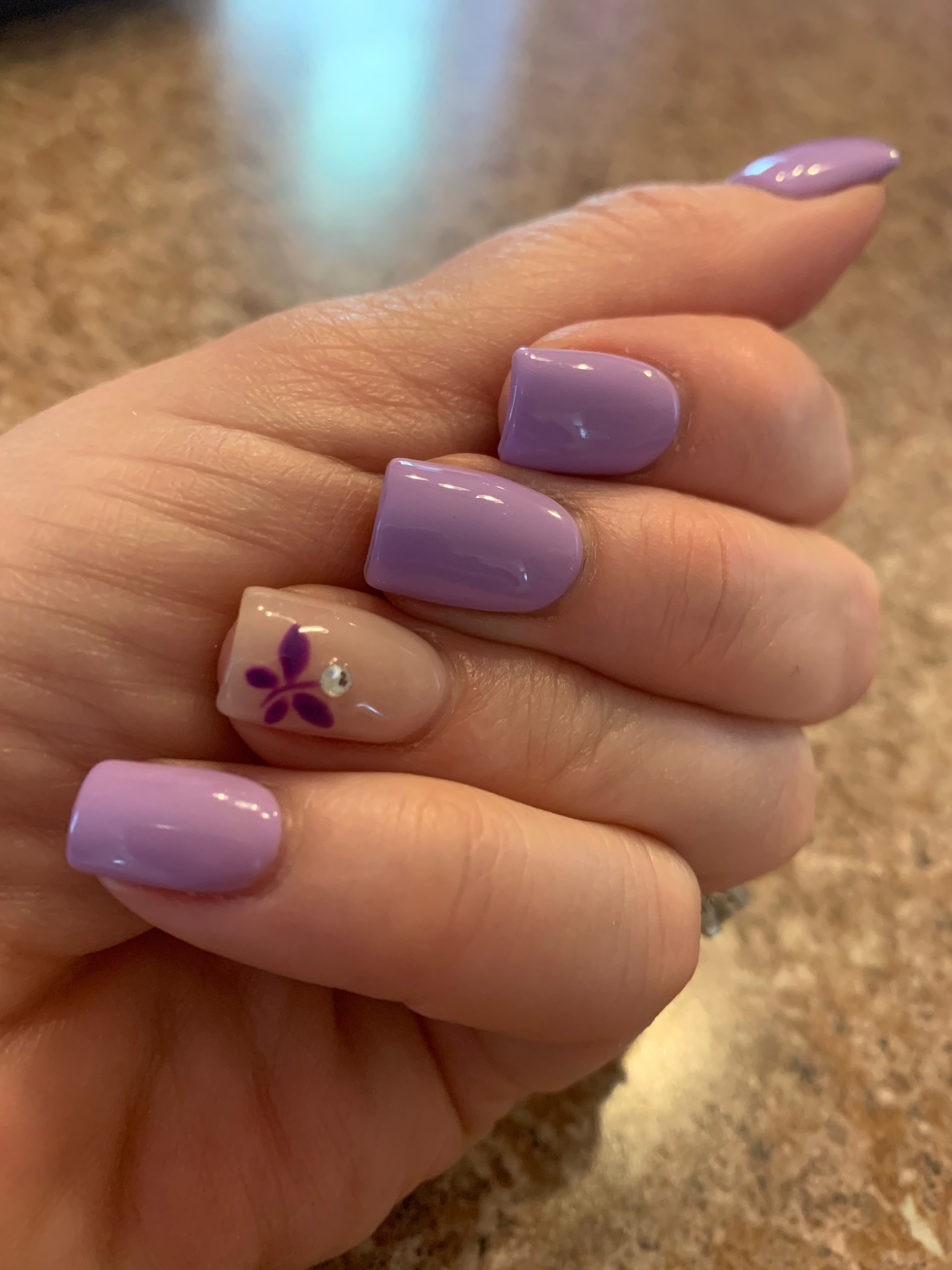 Comparison Guide
 Acrylic vs. Gel Nails: Longevity, Damage & Cost Comparison
Head-to-head breakdown of polymer powder vs. oligomer resins, durability ratings, flexibility, and nail plate health.
 Style Diagnostic
 The Complete Nail Shapes Guide: Geometry, Strength & Hands
Find the most flattering shape for your fingers: Oval, Short Coffin, Round, Almond, and Stiletto engineering.
 Care & Recovery
 Nail Health & Recovery Therapy: Grow Long Natural Nails
Dermatologist-reviewed 4-week protocol to heal damaged, bendable, or splitting nails after enhancements.