Explore Expert Nail Guides & Trends See What's Trending
Guide saved to your personal reading list
Gel Nails

How to Remove Gel Nails at Home Without Ruining Your Nails

The 100% Acetone Foil Method, Steam Removers & Zero-Damage Protocols

Elena Rostova Editor-in-Chief & Master Nail Educator 15 min read
Verified by Elena Rostova • Master Nail Educator
How to Remove Gel Nails at Home Without Ruining Your Nails

Editor's Key Takeaway

"Step-by-step master guide to removing gel nails safely at home: why pure acetone is mandatory, the science of thermal foil wrapping, and keratin post-care."

1. The Anatomy of Damage: Why Peeling Rips Keratin Plates

We have all been there: a corner of your gel manicure begins to lift while you are watching TV or sitting in traffic. The temptation to slide your fingernail under the edge and peel the entire sheet off in one satisfying flick is almost irresistible. Stop right there!

Peeling off a gel manicure is the single most destructive action you can inflict on your hands. Here is the microscopic science of what happens when you peel:

During photopolymerization, the gel base coat forms thousands of microscopic chemical anchors that weave into the porous, fibrous surface of your dorsal nail plate. When you forcibly rip the hardened gel off, the polymer bond does not break—the natural keratin fibers tear instead. Peeling rips away 30 to 50 layers of dorsal keratin cells in a single second, leaving white chalky patches (known as keratin granulations), thinning the plate by up to 30%, and exposing raw, hypersensitive bed tissue.
Interactive Salon Guide

How Gel Polish Cures: Interactive Salon Studio

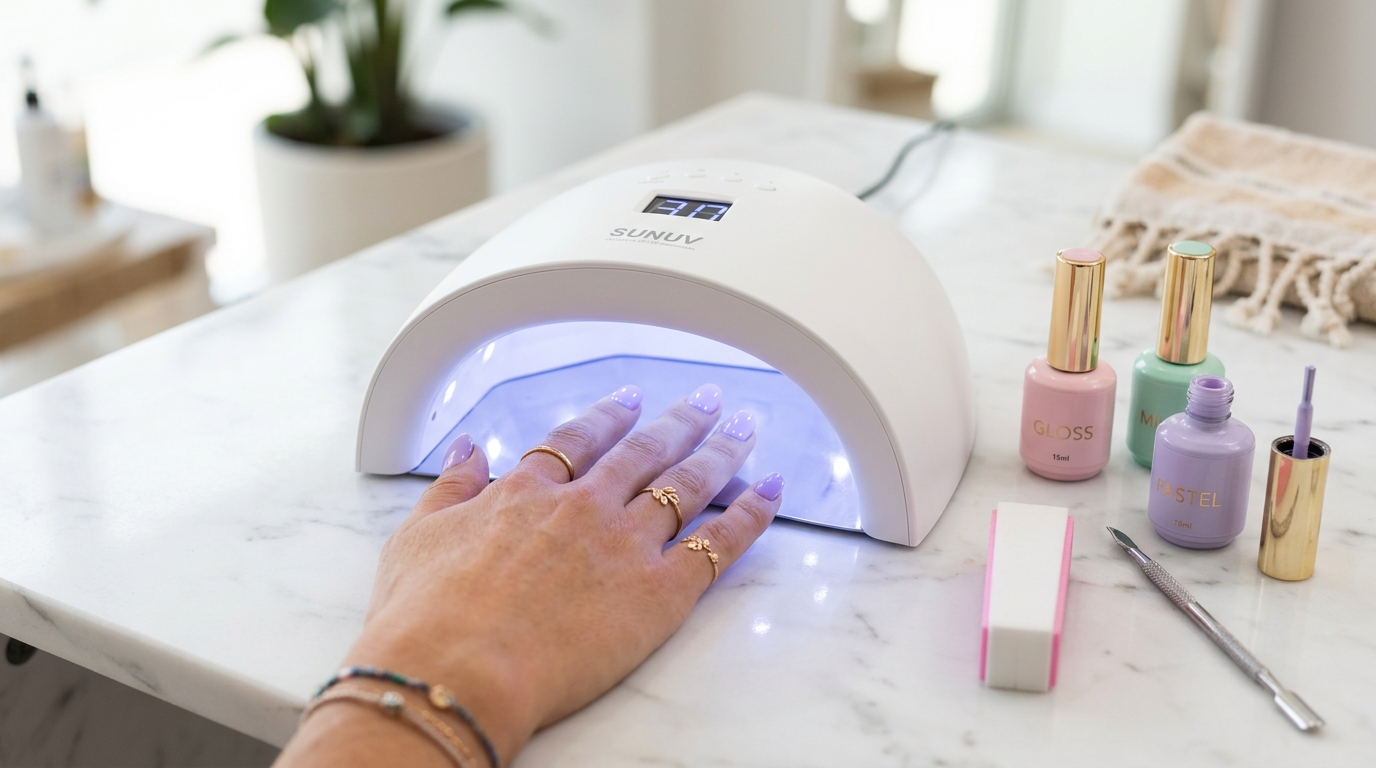
Pick your favorite polish shade, then click "Cure Under Lamp" to see how LED light sets liquid polish into a rock-solid, glass-like shine in 30 seconds.

Select Gel Polish Shade:

Selected Shade: Ballet Slipper Pink

30s
State: Liquid Polish Layer Needs 30s Curing
💡

How It Works: Unlike standard nail lacquer that air-dries by evaporating solvents over hours, gel polish contains photo-reactive resins. When exposed to salon LED light, the molecules cross-link instantly—creating a flexible, chip-proof glass seal that lasts 3 full weeks.

2. The Gold Standard: The 100% Pure Acetone Foil Wrap Routine

Follow Master Educator Elena Rostova’s clinic-approved home removal protocol:

  1. File Away the Top Coat Shield: Using a coarse 100/180-grit file, file the shiny top coat completely until the entire surface is dull and chalky. Gel top coats are formulated to be non-porous; if you don’t file the seal away, acetone cannot penetrate.
  2. Barrier Skin Protection: Apply a thick layer of petroleum jelly (Vaseline) or cuticle oil to the surrounding skin and proximal cuticle fold. This shields delicate skin from acetone dehydration while leaving the nail plate bare.
  3. 100% Technical Acetone Saturation: Cut cotton balls into small nail-sized squares. Saturate with 100% pure acetone (never use regular non-acetone polish remover).
  4. Tight Aluminum Foil Clamping: Place the soaked cotton directly over the nail. Wrap securely in a square of aluminum foil, crimping the tip tightly to trap body heat and prevent acetone vapor from evaporating.
  5. The 15-Minute Thermal Soak: Slip your wrapped hands inside warm winter mittens or rest them on a warm heating pad. Thermal warmth accelerates acetone chemical dissolution by over 200%!
  6. Gentle Orangewood Slide: Remove one foil wrap. The gel should be soft, crumbly, and lifted like shredded cottage cheese. Gently push it off using a flat wooden orangewood stick. If any spot clings firmly, re-wrap for 5 minutes—never scrape aggressively!

3. Electric Steam Removers vs. Plastic Soak Clips

If you remove gel nails frequently, explore reusable removal accessories:

Removal Tool Removal Time Skin Dehydration Level Eco-Friendliness
Traditional Foil Wraps 12 – 15 mins Low (Targeted cotton contact) Single-use waste
Plastic Soak-Off Clips 15 – 18 mins Low (Targeted cotton contact) 100% Reusable indefinitely
Electric Steam Chamber 8 – 10 mins Moderate (Heated acetone vapor) Zero cotton or foil waste

Electric steam chambers warm liquid acetone in a sealed chamber, turning it into hot vapor that breaks down gel bonds in under 10 minutes without touching soaked cotton pads.

4. The 48-Hour Cellular Lipid Recovery Protocol

Acetone is an extraordinary chemical solvent that dissolves gel effortlessly, but it also strips away 100% of the natural squalene and cholesterol lipids that hold your keratin plate together. Immediately following removal, your nails will look chalky, dry, and white.

Rehydrate the plate with the 48-Hour Lipid Protocol: wash hands thoroughly with lukewarm water and gentle soap to remove acetone residue. Massage cold-pressed jojoba oil into all ten nail plates and cuticles every 3 to 4 hours for the next two days. Jojoba’s microscopic wax esters penetrate deep into the dehydrated keratin matrix, restoring natural flexibility and preventing brittle post-removal breakage.

Frequently Asked Questions

Reader Q&A • Expert Insights

Frequently Asked Questions

Expert-verified answers to common questions about techniques, products, and safety.

Can you remove gel nails with hot water and oil?

No! Fully cured gel polish is a non-porous cross-linked polymer that cannot be dissolved by water or vegetable oils. Attempting to pry gel off in hot water will rip your natural nail layers.

Why won’t my gel polish come off with acetone?

If your gel doesn’t budge after 15 minutes in acetone, you either have hard gel (which is impervious to acetone and must be filed off) or you forgot to file off the shiny non-wipe top coat seal.

How long should you let your nails rest between gel manicures?

If gel is removed safely with acetone and nails are kept hydrated with jojoba oil, there is no biological need to "rest" your nails. Natural nail plates are dead keratin tissue that do not breathe air.